
Project Overview
Project Overview
Vardhaman Infra was entrusted with the complete Mechanical, Electrical, and Plumbing (MEP) package for the new annexe block of the Rajasthan High Court in Kota. This prestigious government project demanded the highest standards of engineering precision, safety compliance, and timely delivery. The scope encompassed HVAC, electrical LT distribution, plumbing, fire detection, and suppression systems spanning all 12 floors of the annexe building.
As a judicial facility of state importance, every aspect of the MEP design had to meet stringent government building codes, Bureau of Indian Standards (BIS) specifications, and National Building Code (NBC) fire safety norms. Vardhaman Infra assembled a dedicated team of senior engineers and project managers to ensure seamless coordination across all MEP disciplines.
Scope of Work
- HVAC Systems: Design and installation of centralised air-conditioning for courtrooms, chambers, conference halls, and administrative offices across 12 floors, including VRF systems for judge chambers and centralised AHU-based cooling for common areas.
- Electrical LT Distribution: Complete low-tension electrical distribution including main LT panels, sub-distribution boards, cable trays, conduit systems, lighting (including emergency lighting), and UPS backup power for critical judicial operations.
- Plumbing & Sanitation: Hot and cold water supply systems, drainage networks, rainwater harvesting infrastructure, and sanitary fittings compliant with government green building guidelines.
- Fire Detection & Suppression: Addressable fire alarm systems, sprinkler networks, fire hydrant risers, hose reels, and FM-200 clean agent suppression systems for server rooms and record storage areas.
Technical Challenges and Solutions
One of the primary challenges was integrating modern MEP systems within the architectural constraints of a government building designed to echo the classical judicial architecture of Rajasthan. Concealing ductwork and cable trays required innovative routing solutions, including the use of false ceiling plenums and vertical service shafts that maintained the building’s aesthetic integrity.
The fire safety design presented a unique challenge: the building houses sensitive court records and digital archives that required non-water-based suppression in certain zones. Our team designed a hybrid system combining conventional sprinklers for general areas with FM-200 clean agent systems for record rooms, achieving full NBC compliance while protecting irreplaceable documents.
Coordinating multiple MEP trades on a 12-floor structure without disrupting the adjacent operational court building required meticulous scheduling. We implemented BIM (Building Information Modeling) coordination to resolve clashes between HVAC ducts, electrical conduits, and plumbing risers before installation, saving significant rework time on site.
Materials and Methods
All materials were sourced from ISI-certified manufacturers. Copper conductors from Havells and Polycab were used for electrical wiring, while Daikin VRF outdoor and indoor units were specified for the HVAC system. Plumbing networks used CPVC piping from Ashirvad, and fire suppression piping was ERW steel conforming to IS 1239. The fire alarm panel and detectors were Honeywell addressable systems, providing zone-wise monitoring for the entire building.
Timeline, Team, and Execution
The project was executed over a period of 18 months with a peak deployment of 85 skilled workers and 12 MEP engineers on site. Vardhaman Infra maintained a dedicated site office with a resident project manager to ensure daily coordination with the civil contractor and the supervising PWD engineers. Weekly progress reviews and monthly quality audits ensured the project remained on schedule and met all quality benchmarks. A dedicated quality control team conducted random inspections of all concealed MEP work before false ceiling closure, ensuring that no defects were hidden from view.
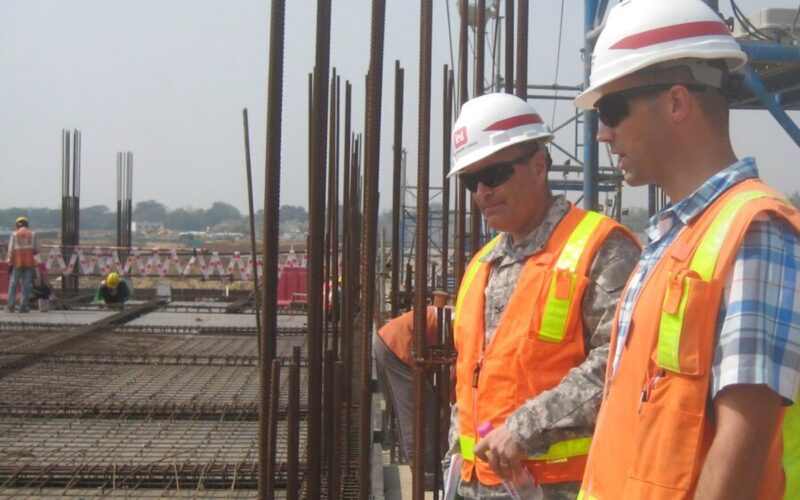
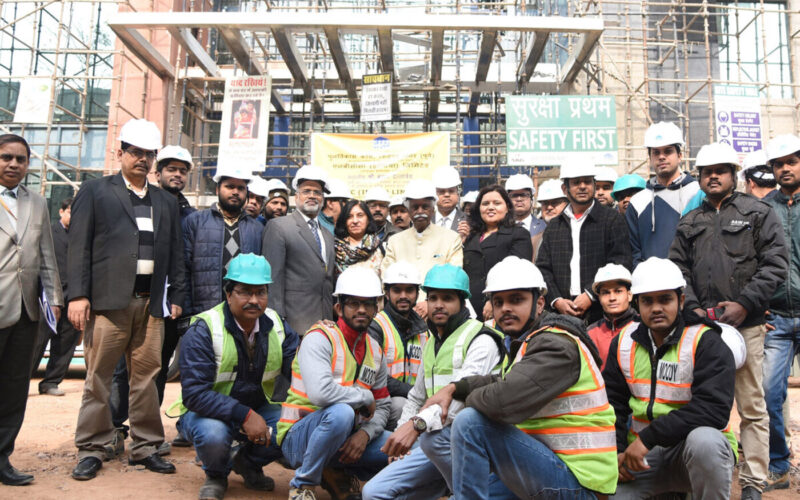
Safety was paramount given the project’s proximity to an operational court building. Vardhaman Infra implemented a comprehensive site safety plan including barricading of work zones, mandatory PPE enforcement, and controlled movement of heavy equipment during non-court hours. Fire watch personnel were stationed during all hot work activities, and a safety induction was mandatory for every worker entering the site.
Results and Client Satisfaction
The project was completed within the stipulated timeline and handed over with zero major snag items. The HVAC system achieved the designed comfort parameters of 24±1°C across all courtrooms, and the fire safety systems passed all statutory inspections on the first attempt. The electrical system’s power factor was maintained above 0.95 through the APFC panel, resulting in significant energy cost savings for the facility. The Rajasthan PWD acknowledged Vardhaman Infra’s work quality and safety record, and this project has since become a reference for our capability in large-scale government MEP contracts.
Key Takeaways
This project reinforced the importance of early-stage BIM coordination in multi-trade MEP projects and demonstrated Vardhaman Infra’s ability to deliver complex institutional projects under strict government compliance frameworks. The experience gained here has been instrumental in shaping our approach to subsequent government and institutional contracts across Rajasthan. The High Court Annexe project also underscored the value of maintaining open communication channels with government stakeholders, which facilitated smoother approvals and faster resolution of on-site design queries throughout the project duration.