
Project Overview
Project Overview
Vardhaman Infra was engaged to provide energy performance simulation and ECBC (Energy Conservation Building Code) compliance documentation for a net-zero-ready commercial office complex. This consulting project involved detailed energy modelling to guide passive design decisions, window-to-wall ratio (WWR) optimisation, building envelope specification, HVAC system selection, and rooftop solar plant sizing — all aimed at achieving a building design that minimises energy consumption and maximises on-site renewable energy generation.
With the Bureau of Energy Efficiency (BEE) making ECBC compliance increasingly stringent and corporate tenants demanding green-certified office spaces, the developer recognised that early-stage energy modelling was essential to avoid costly design changes later. Vardhaman Infra’s energy simulation expertise allowed the design team to evaluate multiple design alternatives and select the optimal combination of passive and active strategies.
Scope of Work
- Baseline Energy Model: Creation of a whole-building energy model using eQUEST and EnergyPlus software, incorporating Kota’s TMY (Typical Meteorological Year) weather data, proposed building geometry, occupancy schedules, lighting power densities, and equipment loads.
- Passive Design Optimisation: Parametric analysis of building orientation, WWR for each facade, external shading device configurations, wall and roof insulation values, and glazing specifications (SHGC, U-value, VLT) to minimise cooling loads.
- HVAC System Comparison: Energy simulation of three HVAC system alternatives — centralised chilled water with VAV, VRF with DOAS, and hybrid systems — to identify the most energy-efficient option for the building’s usage profile.
- Lighting Design Analysis: Daylight autonomy simulation using Radiance software to determine optimal artificial lighting layouts and controls that leverage available daylight, reducing lighting energy consumption.
- Rooftop Solar Sizing: Assessment of available roof area, shading analysis using solar path diagrams, solar PV yield estimation using PVSyst software, and financial viability analysis including net metering benefits under JVVNL (Jaipur Vidyut Vitran Nigam) tariff structure.
- ECBC Compliance Documentation: Preparation of the mandatory ECBC compliance report demonstrating that the proposed design meets or exceeds the prescriptive and whole-building performance requirements of ECBC 2017.
Technical Challenges and Solutions
Kota’s climate presents a unique energy modelling challenge. With summer temperatures regularly exceeding 47°C and winter lows dropping to 5°C, the building experiences both extreme cooling and moderate heating demands. The energy model had to accurately capture the impact of these temperature extremes on HVAC sizing and annual energy consumption. We used hourly weather data rather than monthly averages to ensure our simulation captured peak demand scenarios accurately.
The window-to-wall ratio optimisation was a balancing act between daylighting (which reduces lighting energy), solar heat gain (which increases cooling energy), and architectural aesthetics. Through over 40 parametric simulation runs, we identified the optimal WWR for each facade: 35% for north, 25% for south, 20% for east, and 15% for the west facade (which receives the most intense afternoon solar radiation). This differentiated approach reduced annual cooling loads by 18% compared to the architect’s original uniform 40% WWR design.
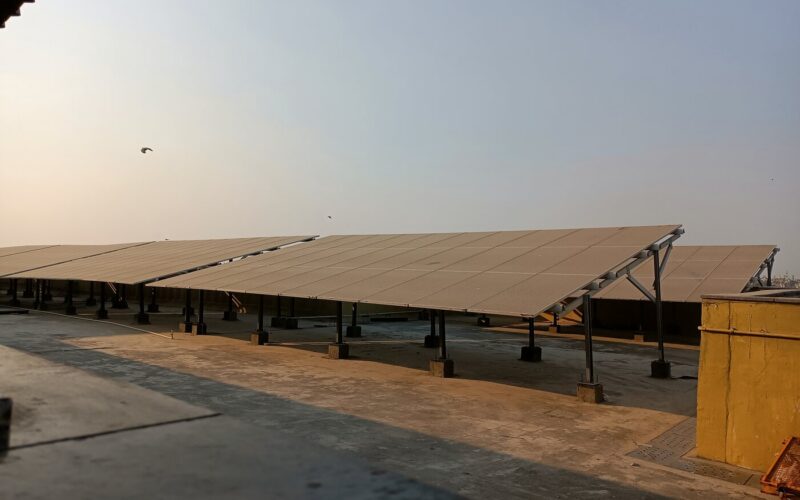
Achieving net-zero-ready status required the building’s annual energy consumption to be low enough that the available rooftop solar could theoretically offset it. After optimising the envelope and systems, the projected EPI (Energy Performance Index) was brought down to 65 kWh/m²/year — well below the ECBC benchmark of 85 kWh/m²/year. The 180 kWp rooftop solar plant, sized to the available shadow-free roof area, was estimated to generate approximately 2.7 lakh kWh annually, offsetting roughly 75% of the building’s projected consumption and achieving “net-zero-ready” classification.
Materials and Methods
The energy model was built in eQUEST 3.65 for ECBC whole-building performance compliance and cross-validated using EnergyPlus 9.6 for detailed system-level analysis. Daylighting simulations used the Radiance engine integrated with Honeybee/Ladybug plugins for Grasshopper. Solar PV analysis was performed in PVSyst 7.2 using satellite-derived solar irradiation data from Meteonorm. All glazing performance data was sourced from manufacturer-certified NFRC (National Fenestration Rating Council) test reports to ensure simulation accuracy.
Timeline, Team, and Execution
The energy modelling and ECBC documentation project was completed in 4 months with a lean team of 3 energy engineers, 1 daylight simulation specialist, and 1 ECBC compliance auditor. The work was structured in three phases: baseline model and analysis (6 weeks), design optimisation iterations (8 weeks), and final documentation and compliance report preparation (4 weeks). Regular design workshops with the architect and structural engineer ensured that energy recommendations were architecturally and structurally feasible.
Results and Client Satisfaction
The final building design achieved ECBC Super ECBC compliance — the highest tier — with an EPI of 65 kWh/m²/year against the baseline of 110 kWh/m²/year, representing a 41% energy reduction. The VRF with DOAS system was selected as the optimal HVAC solution, offering 28% better energy performance than the centralised chiller alternative for this building’s part-load profile. The developer used the ECBC compliance certificate and net-zero-ready branding as key marketing differentiators, contributing to 60% pre-lease commitments before construction completion. The project was also submitted for IGBC (Indian Green Building Council) Green New Building certification.
Key Takeaways
This project demonstrated the tangible commercial value of energy modelling and green building certification in Rajasthan’s commercial real estate market. The 41% energy reduction translates to approximately Rs 18 lakh in annual electricity savings for tenants — a compelling proposition that directly supports higher rental rates and faster lease-up. Vardhaman Infra has since expanded its energy modelling practice, recognising that ECBC compliance is transitioning from a “nice-to-have” to a mandatory requirement as state governments adopt and enforce the energy code across Rajasthan’s commercial building sector.